What are Interactive Games and Puzzles?
Interactive games and puzzles are a type of interactive application. The learner does not just read or watch. They act, the activity responds, and they try again.
🧩 Interactive games and puzzles are structured digital learning activities built from game-like or puzzle-based elements that keep learners actively involved.
Common elements include:
- Rules, challenges, and clues
- Levels and scoring
- Matching and sequencing
- Problem-solving tasks
- Immediate feedback
What makes an activity interactive
An activity is interactive when it responds to what the learner does. The learner makes a move, the activity reacts, and that reaction shapes the next move. A video the learner only watches is not interactive. A puzzle that checks each answer and lets the learner adjust is.
Common building blocks
Most games and puzzles combine a few of these parts. Rules and clues set the task. Levels and scoring track progress. Matching and sequencing shape how the learner responds. Immediate feedback tells them whether they got it right.

Games and puzzles in learning
A game usually has goals, rules, and a score. A puzzle sets a problem with one or more correct solutions. Both ask the learner to do something and respond to each attempt, which is what separates them from passive material.
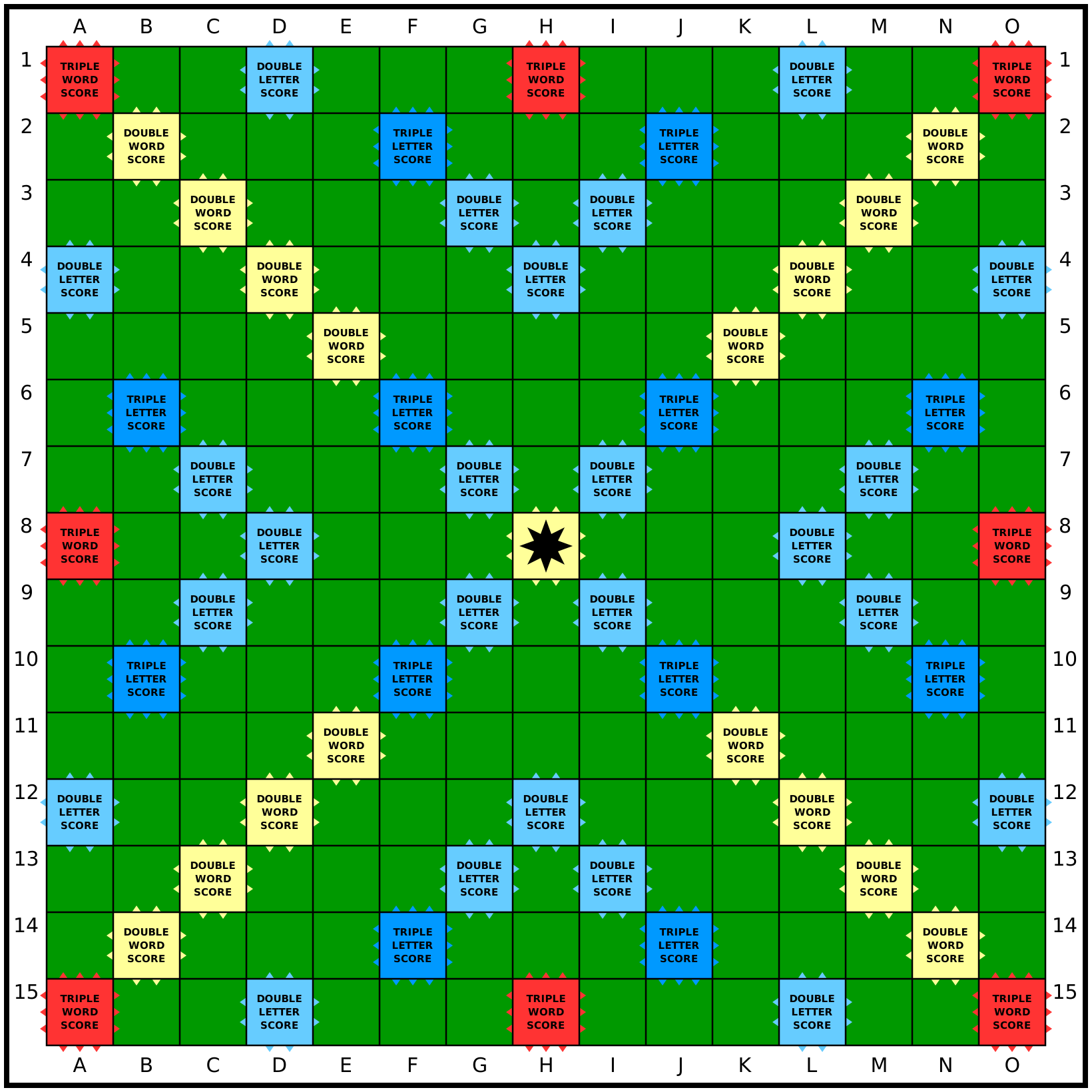

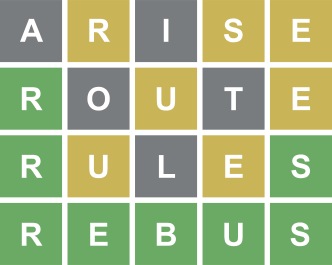


Rules and clues, levels and scoring, and immediate feedback.
Matching, sequencing, and problem-solving tasks are common building blocks too.
How was this article?